Preparing Your Arlington Home for Storm Season
Arlington's storm season runs March through June, with a second severe-weather window in fall. Here's the checklist that actually keeps water out of your house.
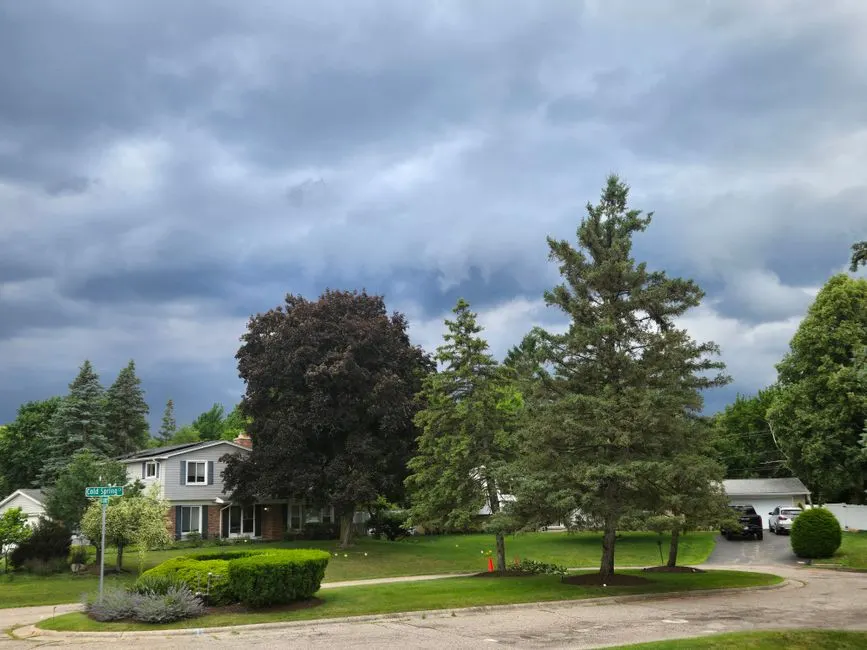
Preparing your Arlington home for storm season means sealing the four places water actually gets in - roof penetrations, window and door openings, the foundation perimeter, and the garage or attic vents - before the first hail event rolls through in March. Arlington's storm season runs roughly March through June, with a second severe-weather window in October and November, and most of the damage we see in this city comes from wind-driven rain and flash flooding, not from the storm itself. The rest of this guide walks through the timing, the checklist, the pre-storm routine, and the mistakes that turn a $400 repair into a $14,000 restoration job.
When Is Storm Season in Arlington TX?
Storm season in Arlington TX peaks from mid-March through late June, when warm Gulf moisture collides with dry air pushing down from the Panhandle and produces the hail, straight-line winds, and supercell thunderstorms that North Texas is known for.
April and May are the busiest months. The National Weather Service office in Fort Worth issues the bulk of its severe thunderstorm and tornado warnings for Tarrant County during that eight-week stretch. A secondary window opens in late October and runs through November, when cold fronts sweep through and drop 2 to 4 inches of rain in a few hours on ground that is already saturated from fall showers.
What that means for you: if you are reading this in November, you have a narrow window to close out fall prep before the next front. If you are reading this in late winter, you have six to eight weeks before the spring pattern locks in. Either way, the work is the same.
How Do I Prepare My Arlington Home for Storm Season?
You prepare your Arlington home for storm season by working from the roof down: clear the drainage path first, then seal the envelope, then stage the supplies and documents you will need if water gets in anyway.
Most homeowners do this backwards. They buy sandbags and a generator, then discover in June that a clogged downspout dumped 40 gallons against the foundation during the last storm. Drainage first. Everything else second.
Here is the order that works:
- Roof and gutters. Clear debris, check flashing around vents and chimneys, and confirm downspouts discharge at least 6 feet from the slab.
- Grading and foundation. Soil should slope away from the house at roughly 6 inches over the first 10 feet.
- Windows, doors, and vents. Replace worn weatherstripping and check that garage doors seal at the bottom.
- Interior staging. Move valuables off the floor in the lowest room of the house and photograph everything for insurance.
If you have already taken on water this year - even a small amount in the garage - do not wait for the next storm to address it. Our team handles water removal arlington TX for everything from a soaked utility room to a fully flooded first floor, and drying a small area now costs a fraction of what a mold remediation does later.
The 12-Point Storm Season Checklist for Arlington Homeowners
This storm season checklist for Arlington homeowners covers the items that actually fail in Tarrant County storms. Work through it once in early March and again in mid-October.
Exterior
- Roof inspection. Look for lifted shingles, cracked pipe boots, and granule loss. A roof older than 15 years in Arlington has likely seen two or three major hail events.
- Gutter and downspout clearing. Arlington's live oaks and pecans drop enough material to clog a 3-inch downspout in a single season.
- Fence and outbuilding anchoring. A 60 mph straight-line wind will take a loose fence panel and put it through a window.
- Tree limb trimming. Anything within 10 feet of the roofline should come down before spring.
Perimeter and Drainage
- Foundation grade check. Add soil where it has settled. The clay soil across South Arlington water damage restoration calls come from shrinks and swells with every wet-dry cycle, and low spots pool water right against the slab.
- French drain and swale inspection. Confirm they still flow. Roots and silt close them off within a few years.
- Sump pump test. If you have one, pour a bucket of water into the pit and confirm it kicks on within 30 seconds.
Interior
- Attic and ceiling stain check. A brown ring on the ceiling is a slow leak that has been running for weeks.
- Window and door seals. Wind-driven rain pushes past worn weatherstripping at 40 mph.
- Water heater and appliance supply lines. Braided stainless lines cost $15 and prevent a $9,000 flood.
- Emergency kit. Flashlights, batteries, a battery-powered radio, 3 days of water, and a waterproof folder with insurance documents.
- Insurance review. Confirm your policy covers wind, hail, and water damage from storm intrusion. Standard Texas policies exclude rising groundwater - that requires a separate flood policy through NFIP or a private carrier.
What Should I Do Before a Storm in Arlington Texas?
Before a storm in Arlington Texas, your job is to reduce the amount of water that can reach the structure and to have a plan for the first 60 minutes after the storm passes.
When a warning is issued for your part of the city, do these five things in order:
- Move vehicles into the garage or away from trees. Hail damage claims in Arlington average $8,000 to $12,000 per vehicle.
- Bring in or tie down anything loose. Patio furniture, trash bins, and grills become projectiles.
- Unplug sensitive electronics. Power surges from lightning strikes travel through the grid.
- Close interior doors to the lowest level. If water enters, closed doors slow the spread.
- Charge your phone and fill bathtubs and pitchers. Boil-water notices are common after major main breaks.
If your home has flooded before, stage towels, a wet-vac, and plastic sheeting near the entry point. Every minute you spend extracting water in the first hour reduces the drying time by hours. When a storm has already pushed water into the house, our emergency water extraction arlington TX crews run 24/7 and can be on-site within the hour.
Storm Damage Prevention: The Cheap Fixes That Save Thousands
Home storm damage prevention arlington Texas homeowners actually get value from comes down to four inexpensive upgrades that most people skip.
Downspout extensions. A $20 flex extension that carries water 6 feet from the foundation prevents the soil erosion that leads to slab movement and foundation cracks. We see this failure pattern constantly in older neighborhoods.
Window well covers. If you have a basement or a below-grade window, a $60 polycarbonate cover keeps 30 gallons of runoff out of the well.
Backflow valve on the sewer line. A $1,200 to $2,800 install (typical 2026 pricing in the Dallas-Fort Worth area) stops city sewer from backing into your lowest drain during a heavy rain. Without one, a 3-inch rain event can put 6 inches of sewage in your laundry room. If that has already happened to you, sewage water extraction arlington TX is a hazmat-level job, not a shop-vac job.
Roof-to-ground drainage for the garage. Garages sit lower than the house on most Arlington lots. A simple trench drain across the apron keeps water out of the garage slab.
None of these are glamorous. All of them are cheaper than a single insurance deductible.
Common Mistakes We See After Every Arlington Storm
The mistakes that turn a manageable storm event into a major loss are almost always the same four, and they repeat in every neighborhood we work in.
Mistake 1: Waiting to call until the water is gone. Water wicks into drywall, baseboards, and subfloor within 24 to 48 hours. Mold colonization starts at the 48-hour mark. By day three, a category 1 water loss becomes a category 2 or 3 loss.
Mistake 2: Running a box fan and calling it dried. A box fan moves air. It does not remove moisture from structural cavities. Without a dehumidifier pulling 30 to 100 pints per day out of the air, you are just circulating humidity through the house.
Mistake 3: Throwing away the wet carpet before the adjuster sees it. Document everything with photos and video before you remove anything. Your adjuster needs to see the extent of the loss.
Mistake 4: Assuming the roof leak is the only problem. Water travels. A leak at the ridge can show up as a stain 20 feet away on the first-floor ceiling. We use thermal imaging and moisture meters to trace the actual path before we cut anything.
If you are dealing with a flooded basement or a wet crawl space after a storm, those are the two areas where homeowners most often underestimate the scope. basement water removal arlington TX and crawl space drying both require equipment most homeowners do not own - commercial extractors, negative air machines, and refrigerant dehumidifiers.
When to Call a Professional
Call a professional when any of these are true: standing water is deeper than 1 inch, water has reached drywall or insulation, the water came from outside the house (storm intrusion, sewer backup, or groundwater), or the affected area is larger than 10 square feet.
Water Damage Restoration Experts handles the full scope - extraction, structural drying, dehumidification, and documentation for your insurance claim. We work directly with most major carriers and can bill the claim directly in many cases. If you are not sure whether your situation warrants a call, call anyway. A 10-minute phone conversation is cheaper than a mold remediation.
Frequently Asked Questions
How do I prepare my Arlington home for storm season?
Clear gutters and downspouts, check roof flashing, grade soil away from the foundation, seal windows and doors, test your sump pump, and photograph your belongings for insurance. Do this in early March and again in mid-October. The full 12-point checklist above covers every item.
When is storm season in Arlington TX?
Arlington's primary storm season runs mid-March through late June, peaking in April and May. A secondary window opens in late October and runs through November. Hail, straight-line winds, and flash flooding are the three main threats during both windows.
What should I do before a storm in Arlington Texas?
Move vehicles under cover, bring in loose items, unplug electronics, close interior doors on your lowest level, and charge your phone. If your home has flooded before, stage towels and a wet-vac near the entry point so you can start extracting water the moment the storm passes.
Does homeowners insurance cover storm water damage in Arlington?
Most Texas policies cover wind, hail, and water damage from storm intrusion - like a roof leak or a broken window. They typically exclude rising groundwater and surface flooding, which require a separate flood policy through NFIP or a private carrier. Review your declarations page before storm season starts.
How long does it take to dry a house after a storm?
Typical structural drying takes 3 to 5 days with commercial equipment. Category 1 water losses in a small area can dry in 48 to 72 hours. Category 2 or 3 losses, or anything involving hardwood floors or a flooded crawl space, often run 5 to 7 days.
Get Help With Water Damage Restoration in Arlington
If a storm has already put water in your home, the clock is running. Our team provides water damage restoration arlington TX around the clock, and we can be on-site within the hour to start extraction and drying.
Call +1 (817) 761-4255 now and we will walk you through the next steps before we arrive.